A Simple Tip To Stop Buying Things You Don’t Need
To support the running costs of Moral Fibres, this post may contain affiliate links. This means Moral Fibres may earn a small commission, at no extra cost to readers, on items purchased through these links.

Need help to stop buying things you don’t need? Let me share with you one simple tip that always helps me rein in my spending.
If you just can’t resist the pull of fast fashion, then it’s easy to say just stop shopping. But the reality is that it’s not always that easy.
Sometimes it can be hard to stop buying things on impulse. Here’s why it can be hard (spoiler: it’s not you, it’s the fast fashion industry). Plus, I’ve got a simple tip that’s helped me cut back on my shopping habits, which might just help you too.
Why It’s Hard To Stop Shopping
Shopping can tug at our feelings in all sorts of ways, and I’ve certainly found that there can be a whole host of emotional triggers for this spending response.
It could be sadness. Perhaps you’ve had a bad day and want to treat yourself. It could be in response to a good day. Perhaps you’ve wanted to treat yourself after something went well, or something you worked hard to achieve. Spending could be in response to boredom or grief.
There are myriad reasons why we find ourselves clicking on “add to basket”. And sometimes it isn’t even always easy to untangle the emotions behind the urge.
And the emotional side of things aside, fast fashion brands are good at manipulating you to keep spending. They spend eye-watering amounts of money to advertise their brand and products, and they hire experts who really understand the psychology of shopping to help encourage you to part with your cash.
Some of their tricks include:
- Emails timed to hit your inbox at carefully calculated times when you know you might be more open to spending. This includes payday, when you might feel like treating yourself after a long month, or a Friday evening, so they can tap into it’s the end of the work week, you deserve it feeling.
- Limited-time discounts and countdown timers
- “Only a few left” stock warnings
- Sponsoring influencer haul videos that normalise overconsumption
- Social proof, gifting influencers outfits to signal that “everyone else is buying this”, when really they’re just giving A LOT of influencers free clothes.
- Identity marketing that suggests buying certain clothes will help you become a more confident or desirable version of yourself.
Once you start noticing these fast-fashion tactics, it becomes clear that the urge to keep buying isn’t a personal failing at all. It’s a predictable response to a marketing machine that studies our behaviour down to the finest detail.
And when you’re tired or stressed or just in need of a boost, you’re more susceptible to their tactics.
How To Stop Buying Things You Don’t Need
Whatever your emotional spending triggers are, and no matter what the psychological tactics fast-fashion brands are using, there’s one technique that I’ve personally found really useful to rein in my spending and to stop buying stuff. Particularly on the high street and when shopping online.
It’s really simple: just work out your hourly rate.
Yup, if you don’t get paid on an hourly rate, then work out your hourly rate. You can then use that information to work out precisely how many hours it would take you to work to buy that item.
Why It Works
I find working out my hourly rate a really useful demotivational tool – which is what you need to beat fast-fashion at its own game. It’s the single most one thing that helps me stop buying things I don’t need.
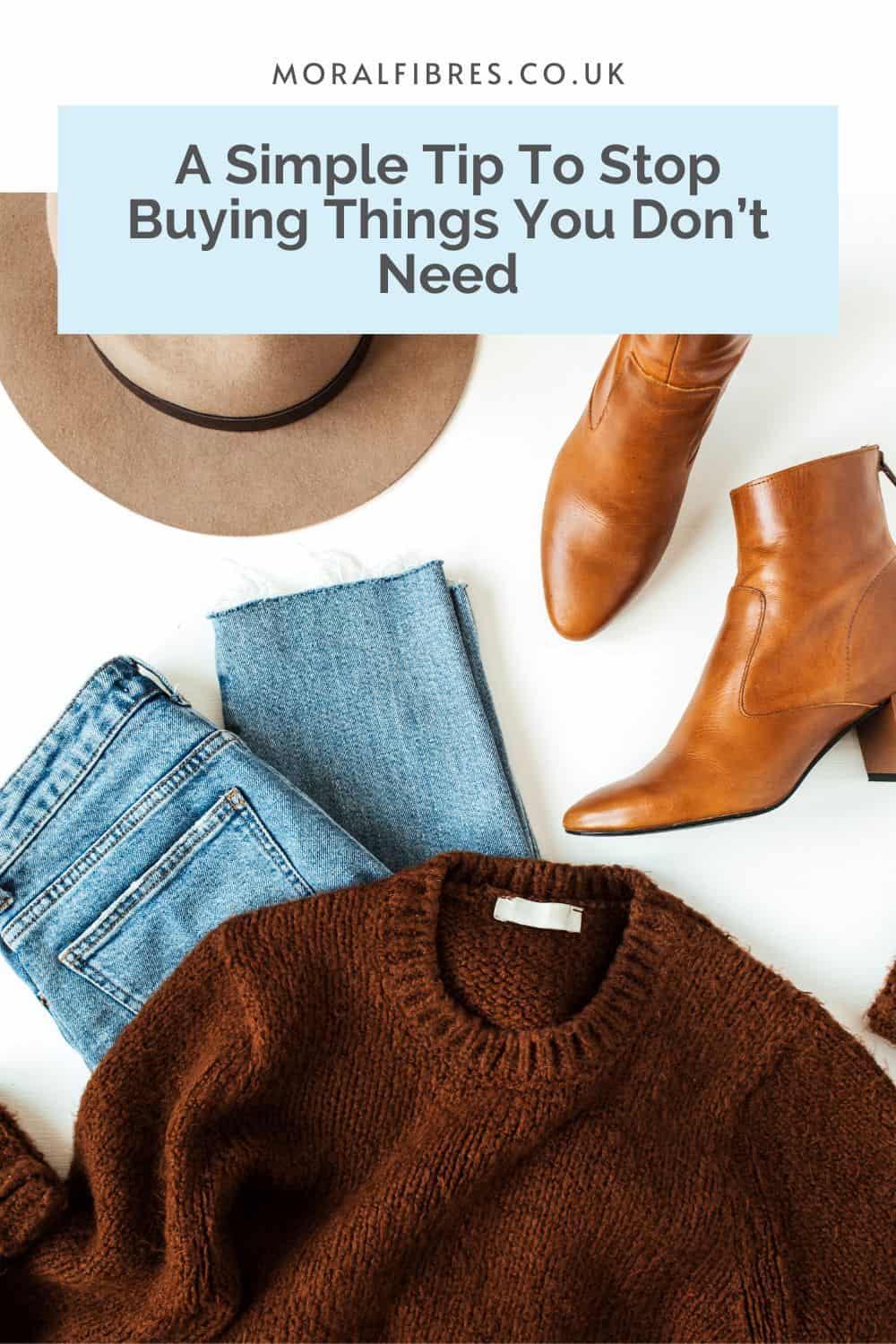
For example, I might ask myself if that ‘must-have’ pair of boots is really worth 6 hours of my time spent at work. Or could I think of a better investment of my time?
I find this a particularly effective method to make me really stop and think about an item’s value against my time spent at work.
I find working out my hourly rate also really helps me think about why I’m working. It’s really helped me realise that I’m not at work to be able to buy stuff I don’t really need. Ultimately, I’m there to provide for my family and have fun experiences with them.
Prioritising experiences over stuff ultimately makes me happier and more fulfilled, and less like I’m chasing the unattainable dream.
It also makes it easier to choose pieces you’ll genuinely wear – because they’re worth that investment in your time. It’s also a handy nudge to repair what’s already in your wardrobe, and to make decisions that support a slower, less throwaway way of living.
More Tips To Help You Become A More Mindful Shopper
Looking for more top tips to help become a more mindful shopper. Here are some of my key resources:
- How to build an ethical wardrobe from scratch
- What is cost per wear, and why it’s important to know
- The five questions to ask yourself before you buy any new clothes
Found this post useful? Please consider buying me a virtual coffee to help support the site’s running costs.
Sign Up For The Moral Fibres Substack
Get all the latest articles from Moral Fibres straight to your inbox, once a month, free of charge through Substack. You can also upgrade to be a paid Substack subscriber, where you’ll receive an additional two exclusive articles a month. Sign up now:


Oh, I do this all the time! Somehow, it’s put thing in perspective in the opposite direction. It’s like, of course I would spend a day’s wages on a nice pair of boots! It does put things in perspective. Thanks for mentioning it.